





Choose nearshore developers when your team needs live decisions during US work hours. Offshore developers suit stable work that can move through written handoffs overnight.
What is the difference between nearshore and offshore software developers?
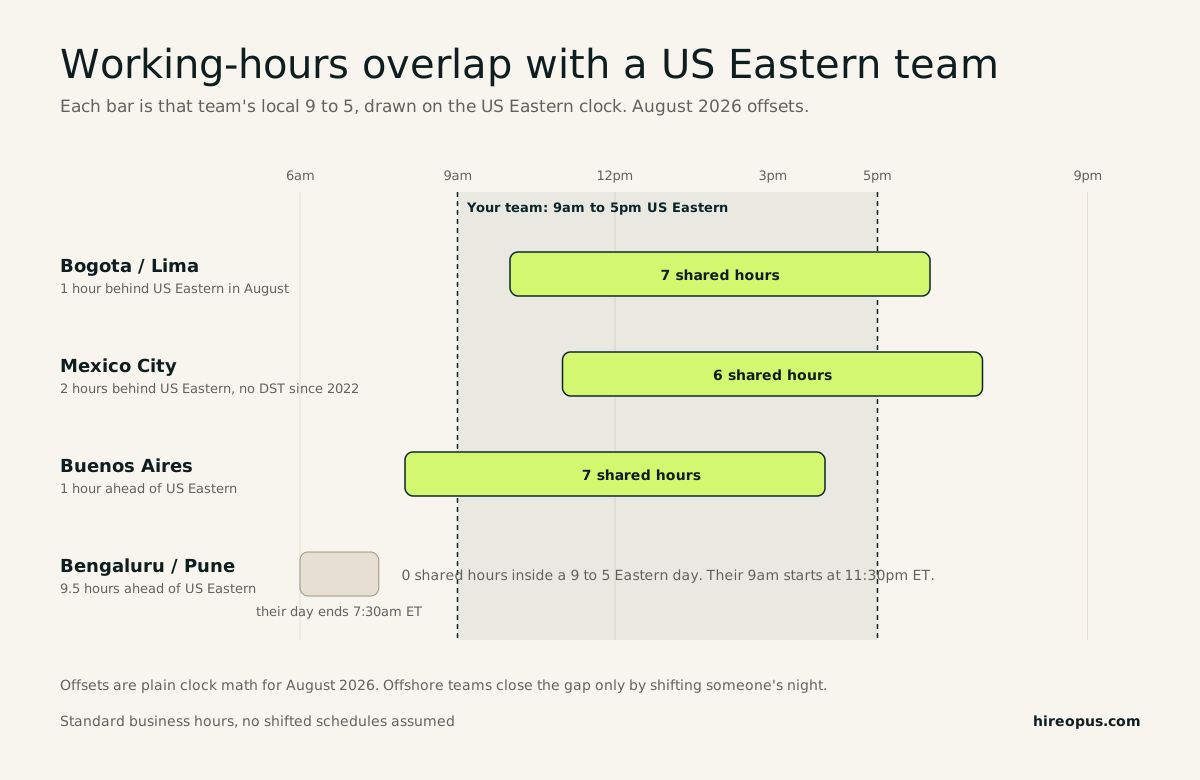
The difference between nearshore and offshore software developers comes down to work hours and the speed of your decision loop. Nearshore developers work in time zones that align with US business hours. Offshore developers work in regions with significant time zone differences from your team.
Want a quick answer for your own hire? The free nearshore vs offshore calculator compares the best country on each side in four clicks.
To decide which structure fits your engineering team, run a simple schedule test on your daily calendar. Map out the exact hours your core team gathers for standups, architecture reviews, and unblocking sessions.
In a nearshore model, a senior engineer in Latin America logs on during your core morning hours. If a pull request needs a code review during your morning, the engineer responds in real time. Your team can resolve technical blockers, align on product requirements, and review the change during the shared working window.
In an offshore model, your core working day aligns with the offshore developer's late evening or night. A question posted on a task board during your afternoon sits unread until your team logs off for the day. The offshore developer reviews the ticket, leaves a response overnight, and waits for your morning answer. That dynamic creates an overnight decision loop for every change in scope, question about API contracts, or failed automated test suite.
This distinction changes how your engineering organization writes documentation and reviews progress. Nearshore collaboration relies on real-time discussion, shared daily priorities, and interactive problem solving during US operational hours. Offshore collaboration relies on fully self-contained ticket specifications, clear acceptance criteria, and written handoffs before your team shuts down for the evening.
Opus places senior full-time talent from Latin America with US companies. When you evaluate nearshore versus offshore models, test whether the role relies on live conversation or can proceed on written overnight updates.
When should a US company choose nearshore software developers?
Select nearshore developers when a software engineering role requires real-time problem solving throughout the US workday. Active product development depends on short feedback loops. When an engineering team modifies product architecture, refactors core services, or builds user interfaces alongside design teams, waiting for the next working window slows the deployment cycle.
A daily calendar workflow highlights where real-time alignment matters:
- Unplanned incident response: Production bugs demand immediate joint debugging between system leads and software developers.
- Pair programming: Senior engineers solve complex edge cases faster by sharing screens and writing code together.
- Live architecture and design reviews: Changing product requirements require real-time pushback on tradeoffs before code enters the repository.
- Daily standups and sprint planning: Product managers run planning meetings during standard working hours without requiring late-night or early-morning attendance.
Ask the candidate to describe the handoff when a design changes during a sprint. A clear answer shows whether the role can stay useful when the plan changes in front of the team.
Before interviews, list the meetings the engineer must join and the decisions they must make without a written handoff. That list turns the nearshore choice into a schedule test.
Opus places senior software developers from Latin America who work US hours in fluent English. Put that requirement in the brief when the role must join live standups, design reviews, or incident calls.
When does offshore software development fit better?
Offshore software development fits best when an engineering organization operates on fully asynchronous workflows and decoupled code architecture. If a project does not rely on real-time discussion during US business hours, working across wide time zone differences creates an effective continuous execution cycle. A US team writes specifications and reviews submitted code during their day, while the offshore team completes the implementation during their local working hours.
This model succeeds when built on a rigid written handoff framework with clear API contracts. Engineering leaders must define system boundaries using documented interface definitions, OpenAPI specifications, or typed GraphQL schemas before assigning tickets. When input structures, payload types, and endpoint behaviors are fully specified in advance, an engineer can construct services against the interface without waiting for real-time clarification.
Acceptance criteria must be explicit before work enters a sprint cycle. Every task ticket needs the required inputs, expected outputs, error handling, performance boundaries, and unit test requirements. If a pull request relies on unwritten product context, put that context in the ticket before handoff.
The review path in an offshore model operates entirely through structured pull requests and automated validation tools. A US engineering manager logs verified tickets with explicit reproduction steps and expected outputs before logging off. The offshore developer picks up the ticket, writes the code, runs local unit tests, and opens a pull request with full commit notes. The US lead reviews the code, leaves inline comments for revisions, or returns it for the next review window.
This handoff pattern works for well-bounded projects, such as isolated microservices, legacy database migrations, regression test suites, or secondary features against a mature design system. When requirements are predictable and documented, the US lead has a defined handoff to review when the next working window opens.
How can a US company evaluate vetted Latin American software developers?
Most senior searches start with a job description that lists frameworks and years of experience. That document filters for resume keywords, not for engineers who can actually own the work. To find qualified LatAm developers, engineering leaders need an evaluation framework focused on practical execution.
A practical technical scorecard should cover:
- Role ownership: The candidate describes how they take a feature from an initial scope document to production deployment without hand-holding.
- Similar evidence: The candidate presents specific code, architectural designs, or systems from past work that match the scale of your current stack.
- Tradeoff reasoning: The candidate explains why they chose one framework, data structure, or database over another, making their technical rationale visible.
- Written communication: The candidate writes clear code comments, pull request descriptions, and technical documentation in clear English.
- Live collaboration: The candidate walks through a technical exercise live, answering questions calmly and incorporating direct feedback in real time.
- Reference checks: Past managers confirm the candidate's technical claims, work ethic, and ability to meet project deadlines.
Use a practical exercise that resembles the work. Ask the candidate to explain tradeoffs, identify risk, and communicate a recommendation to both technical and non-technical teammates. Strong senior engineers make their reasoning visible.
Do the vetting before the client interview. Opus, a nearshore recruiting firm placing senior full-time talent from Latin America with US companies, starts with a scoping call to define the role. A vetted shortlist typically arrives in about a week. Decide who needs to interview, what each conversation should test, and who owns the final call before the first meeting.
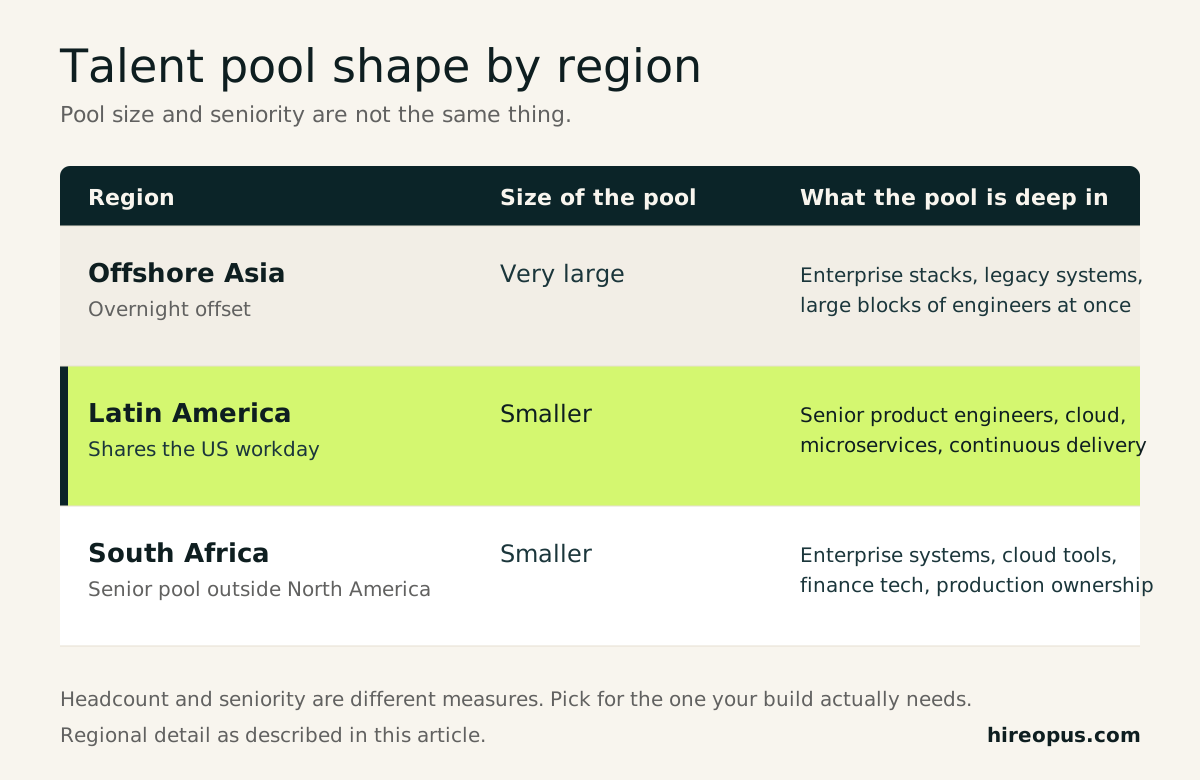
What does current developer activity say about the global hiring market?
GitHub's Octoverse 2025 report, published October 28, 2025 and updated February 28, 2026, shows rapid growth in developer activity on GitHub. The report states that more than one new developer joined GitHub every second on average in 2025, bringing more than 36 million new developers to the platform in a single year. More than 180 million developers now build on GitHub globally. In that same report, GitHub Staff noted that "If 2025 had a theme, it would be growth." and "The talent boom is geographically diverse."
The same Octoverse 2025 report says India added more than 5.2 million developers in 2025, a little over 14% of GitHub's more than 36 million new developers that year. In Latin America, about six developers joined GitHub each minute during the year covered by the report. GitHub also reports more than 230 new repositories every minute and 43.2 million pull requests merged on average each month in 2025.
Engineering leaders must separate platform growth from candidate availability. A GitHub profile proves account creation and public repository activity, but it does not confirm senior technical proficiency, fluent English communication, or readiness to own production systems in US time zones. Use those platform numbers as a reason to screen carefully, not as proof that a profile shows senior technical readiness. Test the work before scheduling team interviews.
How do remote work patterns and payroll support affect the hiring decision?
According to the Stack Overflow 2024 Developer Survey, 38% of survey respondents worked remotely, 42% worked in hybrid settings, and 20% worked in person. The 2024 survey noted that the hybrid share stayed consistent with the prior year, while the in-person share increased for the third year in a row. For a US engineering leader, the operating question is direct: who owns the work window, payroll, compliance, and benefits? Assign those owners before expanding the team internationally.
Opus, a nearshore recruiting firm, contracts talent and handles payroll, compliance, and benefits so the client does not have to. Candidates placed by Opus work US hours in fluent English. In addition to software engineering and DevOps, Opus places senior roles in operations, finance and revops, customer success, HR and payroll, SDR, and project management.
Onboarding takes about two weeks after selection. Opus provides a lifetime replacement guarantee on every placement and reports 97% one-year retention.
To convert these operational decisions into a clear candidate pipeline, place your required work window, core daily overlap hours, and technical ownership expectations directly into the scoping brief. Specify the exact time zone coverage needed for live standups, the primary asynchronous communication channels, and target review turnaround times for code reviews. Writing those exact operational rules into the brief before candidate vetting begins ensures that every engineer on your shortlist fits both your code standards and your daily working schedule.
Frequently asked questions
How are nearshore and offshore software developers different?
Nearshore developers work in time zones that align with US business hours. Offshore developers work across larger time differences. Nearshore supports live decisions, while offshore relies on written overnight handoffs.
When should a US company hire nearshore developers?
Choose nearshore for roles that need live problem solving during the US workday. It suits incident response and pair programming. It also keeps design reviews and daily planning inside normal working hours.
When is offshore software development a better fit?
Offshore development fits well-bounded work with predictable requirements. It needs explicit acceptance criteria and clear API contracts. The US team can review code during its next working window.
How do you vet Latin American software developers?
Start with a practical exercise that resembles the work. Ask the candidate to explain tradeoffs and identify risk. Then check written communication and live collaboration. Past managers should confirm the candidate's technical claims.
Who handles payroll and compliance for nearshore developers?
Opus contracts the talent. Your company manages the person's day-to-day work. It handles payroll, compliance, and benefits for the client.