





Hiring a senior engineer in about two weeks requires removing dead time between interview stages. You need a clear role brief, a practical technical assessment, a single process owner, and a 24-hour decision standard after every interview. A signed offer in about two weeks depends on running a structured, tightly scheduled loop.
What should you define before hiring a senior engineer?
Hiring a senior engineer in about two weeks requires defining production ownership before looking at tool lists. Most technical job posts list frameworks and years of experience. That filters for resume keywords rather than engineers who can keep system architecture running under load.
According to Google's SRE monitoring chapter, "The four golden signals of monitoring are latency, traffic, errors, and saturation." A senior engineer takes responsibility for instrumenting these four areas across your environments. Latency measures the time it takes to service a request. Traffic tracks system demand, such as HTTP requests per second. Errors measure failed requests. Saturation tracks the overall fullness of your most constrained resources, like memory or CPU usage.
Google's SRE chapter puts the job plainly: "Your monitoring system should address two questions: what's broken, and why?" Senior candidates must own the logic behind these alerts. Instead of sending raw CPU spikes to general Slack channels, they build alerting systems that trigger only when user experience degrades or system limits approach failure. An engineer waking up at midnight receives immediate context on the root cause rather than a stream of uncorrelated log entries.
Defining production ownership upfront stops team leaders from changing criteria midway through interviews. US companies hiring software engineering or DevOps roles through Opus start with a single scoping call to define these exact technical boundaries before reviewing candidates.
- Define which microservices, databases, or cloud infrastructure the candidate will support on day one.
- Document the target response times for operational incidents and performance bottlenecks.
- Identify the cross-functional decisions the engineer must make without waiting for explicit manager approval.
How do you build a senior engineer scorecard?
A proper scorecard links specific technical competencies to observable candidate evidence rather than vague impressions. A Karat guide published May 27, 2021 recommends defining role competencies, mapping them to observable candidate actions, and using shared rating language across interviewers.
To build a scorecard that speeds up hiring decisions, focus on observable behaviors:
- System architecture choices. Look for candidates who justify why they chose a specific database, queue, or service boundary based on clear operational constraints.
- Debugging performance. Track whether the engineer approaches unknown failures with structured hypothesis testing or random trial and error.
- Code maintainability. Measure whether their written work includes clear interface boundaries, direct error handling, and useful tests.
Do not grade candidates on arbitrary scale terms like expert or pass. Define exact behavioral anchors for every rating. A candidate who receives a passing mark on system design should explicitly articulate operational tradeoffs, identify single points of failure without prompting, and explain how their design degrades under heavy load.
When every interviewer uses the same behavioral anchors, the debrief compares evidence instead of personal preference. The engineering leader can compare candidates against clear standards rather than resolving subjective disagreements between team members.
Opus, a nearshore recruiting firm places senior full-time talent from Latin America, with US companies. Candidates work US hours in fluent English. Your team still evaluates the technical evidence against the scorecard.
What should a senior engineer practical interview test?
A practical interview should test how an engineer navigates real code rather than abstract brain teasers or reversed binary trees. A ScaledByDesign article published April 13, 2026 recommends a 90-minute live pairing session on a sanitized version of your actual codebase. This format exposes the candidate to your genuine system architecture, framework choices, and existing technical debt.
During this live pairing block, present a real operational problem from your repository history. Examples include debugging a connection pool exhaustion issue, refactoring a high-latency database query, or adding a missing feature to an internal service API. You want to see how the candidate reads unfamiliar code, runs local tests, isolates root causes, and validates fixes.
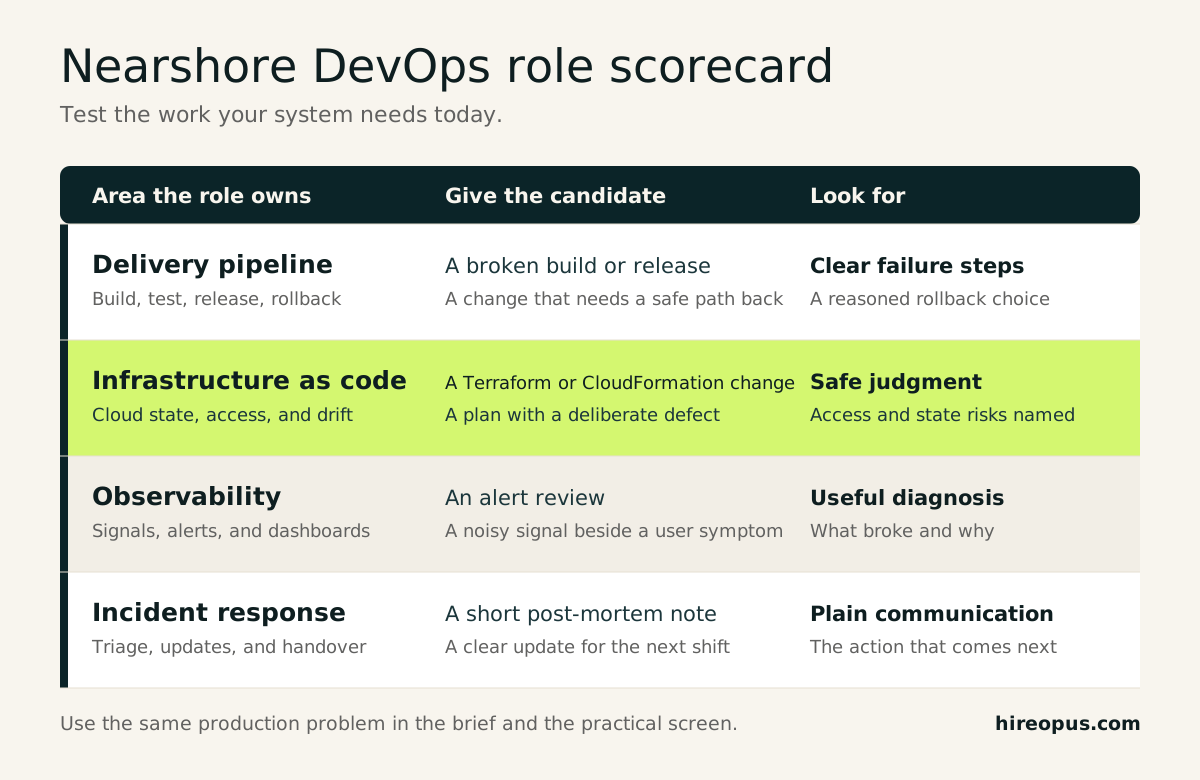
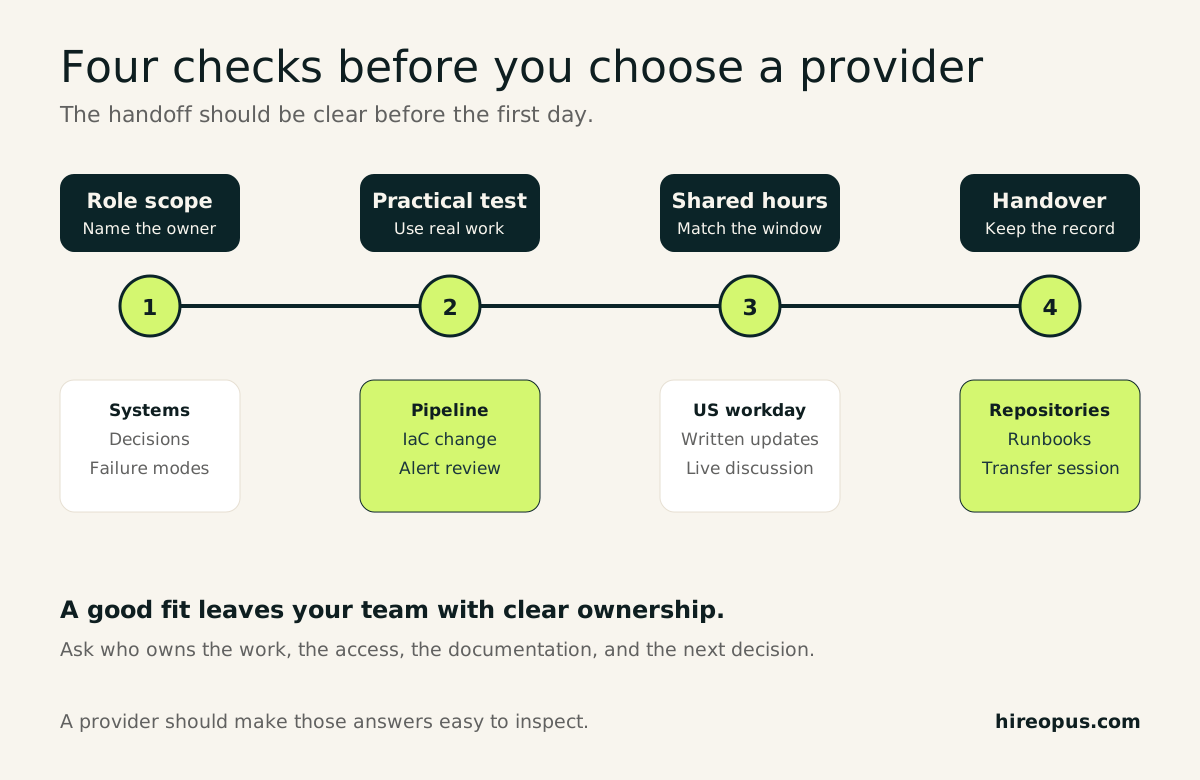
A structured practical exercise evaluates these engineering capabilities:
- System navigation: How fast does the candidate orient themselves within an unfamiliar directory structure and trace execution flows across dependencies?
- Problem isolation: Do they form hypotheses and run targeted checks, or do they make random code changes hoping something works?
- Architectural tradeoffs: Can they articulate why a simple patch is appropriate for an urgent fix, while outlining the complete refactor needed long term?
- Live collaboration: How effectively do they talk through their mental model, ask clarifying questions, and take constructive feedback during a code review style discussion?
SHRM's article published December 21, 2023 says work samples that mimic the job can indicate future performance. Put candidates in a sandboxed environment with a failing queue. Observe whether they inspect queue lag metrics, evaluate payload sizes, or check thread worker saturation. Strong senior engineers make their analytical process transparent as they work. They test boundary conditions, handle edge cases cleanly, and write code that their teammates can maintain long after the session ends.
How should you schedule a senior engineer interview loop?
A roles.cc article published June 30, 2026 says elapsed time accumulates primarily between evaluation steps rather than inside the meetings themselves. Compression requires grouping technical and team evaluations into back-to-back blocks and maintaining a strict 24-hour response standard after every candidate touchpoint.
A structured schedule uses three meetings across the first two weeks:
- First conversation: A 30-minute call focused on role expectations, US work hour alignment, and immediate technical background.
- Technical session: Architecture review combined with live pairing.
- Final panel: A 60-minute discussion with engineering leadership and cross-functional team members about trade-off communication and delivery ownership.
A Recruiting from Scratch article published June 25, 2026 names unclear criteria, extra rounds, slow feedback, and diffuse ownership as causes of slow engineering hiring. Keep the three-round ceiling so each session adds a distinct signal.
Name one process owner to keep the loop moving. The same roles.cc article recommends one person to collect panel evaluations, enforce the 24-hour feedback deadline, and make the final decision. Every interviewer submits written feedback based on the established rubric before the debrief.
Use the same schedule for every candidate. If a hiring partner supplies the shortlist, keep the technical and cross-functional review inside this block. Your team should own the final decision.
What should you ask in a senior engineer reference check?
Reference checks fail when they ask for general character statements. Former managers give polite, vague answers that reveal nothing about operational ability. To get useful signal, ask about specific decisions, past production incidents, and how the candidate handled technical disagreement.
SHRM's December 21, 2023 article describes structured interviews that ask each candidate the same set of defined questions. Apply that approach to reference conversations. Ask the direct manager these questions:
- What was the candidate's exact role during their largest system outage, and how did they communicate with the team?
- How did they balance speed against system reliability when pushing code under a tight deadline?
- Can you give an example of a technical recommendation they made that was rejected by the team, and how did they respond?
- If you could hire this engineer again today for a mission critical service, would you hire them, and in what exact role?
Ask follow-up questions that demand observable facts rather than opinion. If a former manager says the candidate was great at system design, ask for the name of the last service they designed from scratch and what metrics proved its stability. If the manager notes that the engineer was slow to ship, ask whether the bottleneck was caused by test coverage requirements or unclear scope.
Conduct reference calls while candidate feedback from the final loop is being reviewed. This keeps the timeline tight and ensures you verify claims about ownership before extending an offer. Opus presents a shortlist of vetted candidates in about a week. Your team still owns the final reference decision.
How can you hire a senior engineer in about two weeks?
Compressing a technical search into about two weeks requires eliminating the time spent sourcing and screening cold applicants. CRV's March 5, 2026 guide reports a 48-day median time to hire for tech roles. A selection window of about two weeks requires a smaller search and faster decisions than that baseline. Engineering leaders cannot reach a signed offer in about two weeks if they rely on a large inbound queue of unvetted applicants.
Opus, a nearshore recruiting firm places senior full-time software engineering and DevOps talent from Latin America, with US companies. Opus starts with a scoping call and presents a shortlist of vetted candidates in about a week. Candidates work US hours in fluent English.
Your team can use the practical exercise and the same scorecard for the final evaluation. Once you make a hiring decision, Opus handles onboarding in about two weeks while contracting the talent and taking care of payroll, compliance, and benefits. Your company manages the person's day-to-day work.
Opus backs every placement with a lifetime replacement guarantee and reports 97% one-year retention. When candidate sourcing and back-office compliance are handled by an external operator, engineering teams spend their time exclusively on technical evaluations and final hiring decisions.
Frequently asked questions
How do you speed up hiring a senior engineer?
Use a smaller vetted pool and make decisions quickly. Keep the loop to three rounds and return feedback within 24 hours.
What do you need to define before hiring a senior engineer?
Name the systems the engineer will own on day one. Set response targets for incidents and document which decisions do not need manager approval.
How do you interview a senior engineer with a practical test?
Use a sanitized codebase and a real operational problem. Watch how the candidate forms hypotheses and runs targeted checks. Their fix should handle edge cases and remain maintainable.
How many interview rounds should a senior engineer have?
Use no more than three rounds. Every session should add a distinct signal, and one owner should collect feedback within 24 hours.
What should you ask during a senior engineer reference check?
Ask former managers for one specific production incident and the candidate's exact role. Follow up on how they balanced speed against reliability. Run reference calls while final interview feedback is reviewed.