





Set the required US-hour overlap before sourcing. Then test schedule conversion, technical judgment, written handoffs, and ownership. Choose a full-time engineer for durable ownership or a contractor for bounded work.
Opus, a nearshore recruiting firm, places senior full-time engineers who work US hours in fluent English. Start by defining which US hours the engineer must share and which decisions require them.
What time-zone overlap does the engineering role actually need?
Start with the live decision the engineer must make. If a DevOps lead must join Pacific incident response through 5:00 p.m. Pacific, write that requirement before sourcing. A software engineer who joins planning, review, and one unblock window may need a smaller fixed block. Independent delivery can use written handoffs when you name the next owner and expected response.
Use a real week of work to set the window. If a New York product lead reviews designs at 11:00 a.m. Eastern and a California engineering manager joins at 9:00 a.m. Pacific, the useful shared block starts at noon Eastern. A full Eastern workday would add hours without solving another team need. Choose the narrowest window that covers actual planning, review, and incident decisions.
Microsoft researchers John C. Tang, Chen Zhao, Xiang Cao, and Kori Inkpen reported in their 2011 study of 16 team members, “Despite time zone differences of about eight hours, collaborators still found time to synchronously meet.” The 2011 Microsoft paper also found that some meetings fell outside normal work hours. Decide before hiring whether that burden is acceptable and how the team will share it.
Set the required overlap before the scoping call so the schedule can be stated clearly. Opus, a nearshore recruiting firm, starts with a scoping call and places software engineering and DevOps talent from Latin America, with US companies. Candidates work US hours in fluent English. Name the specific hours that matter for the role before sourcing begins.
How should you write the US time-zone requirement?
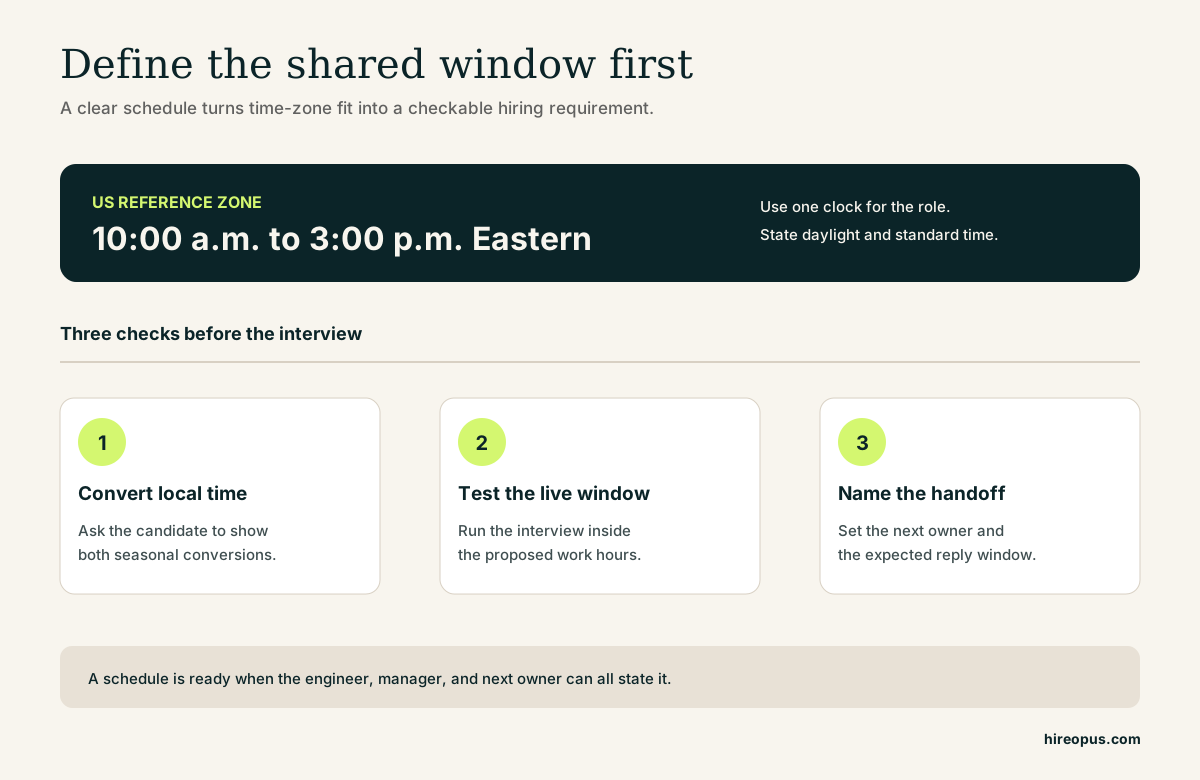
State one US reference zone, the exact live window, the reason for it, and what happens when US clocks change. The phrase US-friendly hours cannot be tested. A requirement for planning, review, and incident escalation from 10:00 a.m. to 3:00 p.m. Eastern gives the candidate and the hiring team the same standard. State on-call coverage separately from daily overlap.
The National Institute of Standards and Technology Local Time FAQs, updated October 11, 2024, lists Eastern as UTC-5 in standard time and UTC-4 in daylight time. The same October 11, 2024 NIST page lists Central as UTC-6 and UTC-5, Mountain as UTC-7 and UTC-6, and Pacific as UTC-8 and UTC-7. Put both seasonal conversions beside the required window so a candidate can check the schedule before an interview.
The October 11, 2024 NIST page says US daylight saving time begins on the second Sunday in March and standard time returns on the first Sunday in November. The same October 11, 2024 NIST page notes that Hawaii, American Samoa, Guam, Puerto Rico, the Virgin Islands, and most of Arizona do not observe daylight saving time. If one location changes clocks and the other does not, the relative schedule changes.
Suppose a DevOps engineer must join a daily release check at 10:00 a.m. Eastern and remain available for incident escalation until 3:00 p.m. Eastern. That calls for a core block from 10:00 a.m. to 3:00 p.m., with on-call coverage stated separately. When live attendance ends, name the next owner and the reply window for written handoffs.
A role description can set core collaboration from 11:00 a.m. to 4:00 p.m. Eastern for design review, code review, and incident escalation. It should ask candidates to confirm their local hours in both US standard time and daylight time. As of August 2026, Opus provides a shortlist of vetted candidates in about a week. A checkable schedule lets you assess that shortlist against the work instead of using location as a proxy for availability.
How do you test US-hours fit during interviews?
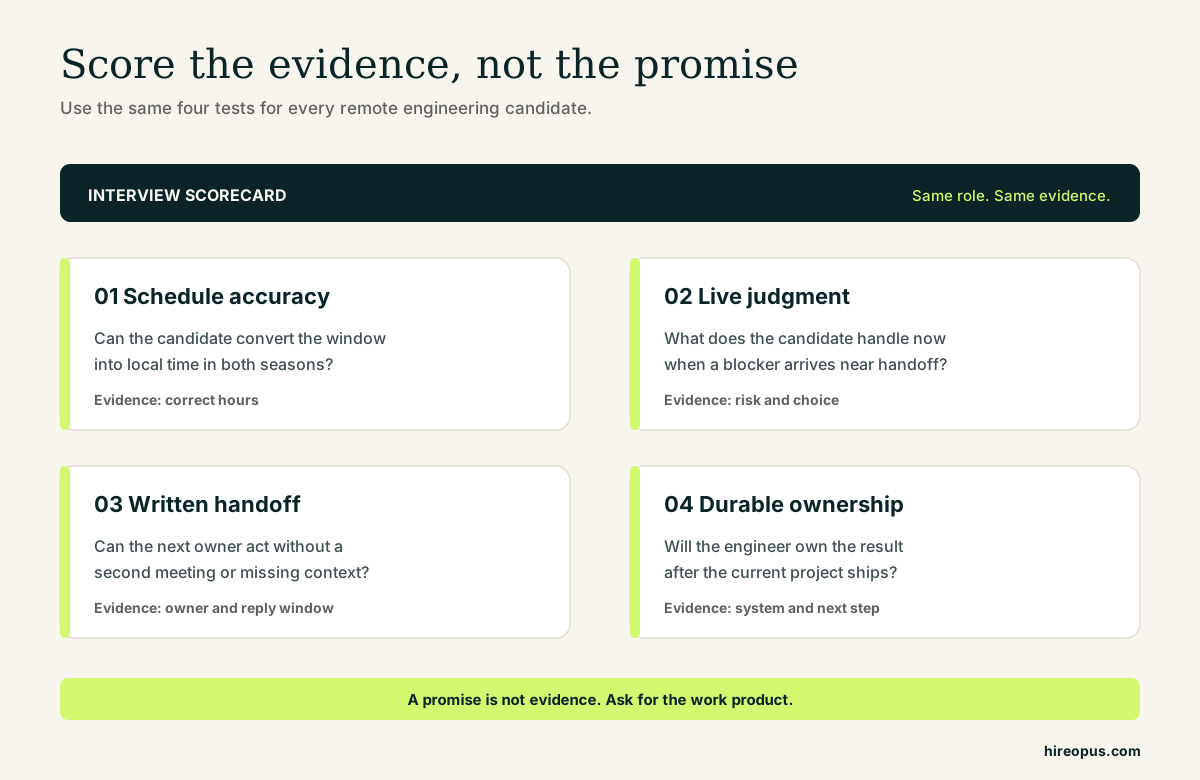
Test schedule accuracy, technical judgment, written handoffs, and escalation choices with the same evidence for each candidate. Give the candidate the stated US window and ask for the local conversion in both standard time and daylight time. Then run the interview inside that proposed window. A correct conversion at the expected hour is stronger evidence than a promise to be flexible.
Use a problem that resembles the role. For a software engineer, present a design change with an unclear dependency and ask what can move before the dependency is resolved. For a DevOps candidate, present a service alert near the end of the shared window. Ask what must be handled live, what can wait, and what the next owner needs in writing. Score the decision, the risk, and the handoff.
When a request can wait, ask the candidate to name the expected reply window and the fallback. When it cannot wait, ask for the live escalation path and the written handoff that follows. This test connects schedule fit to a real engineering decision.
The 2023 CHI paper by Lillio Mok, Lu Sun, Shilad Sen, and Bahareh Sarrafzadeh analyzed 20 million Microsoft meetings and included a survey of 130 employees. It linked cross-time-zone meetings with early and late scheduling and found that the burden was not shared evenly. The authors wrote that “cross time zone meetings serve as connective events.” Use those events with intent. Do not make an edge-hour interview a hidden endurance test.
Opus, a nearshore recruiting firm, vets candidates before presenting its shortlist. Apply the same role-specific evidence bar to each shortlisted engineer. Extra interviews that test no named decision add time without improving the comparison.
Should you hire a full-time remote engineer or a contractor?
Hire a full-time remote engineer when the work needs durable system ownership. Use a contractor when the work has a bounded deliverable and a clear end condition. Neither model wins by default. Choose based on how long decisions persist, how much context must accumulate, and who owns the system after the current project ships.
A full-time engineer fits a service that will keep changing across releases. Examples include deployment reliability, an architecture migration across several product cycles, or code quality decisions that affect multiple teams. The value is continuity of judgment as the system changes. Opus places senior full-time talent from Latin America, with US companies.
A contractor can own a database migration when the schedule and finish line are explicit. Set a live review block, such as 1:00 p.m. to 3:00 p.m. Eastern, and name the engineer who accepts the target state. Require a written handoff with the open risk and next action before the contractor signs off. If you cannot name the acceptance owner or final handoff, the engagement is not yet bounded.
| Provider | Talent and schedule facts | Administration facts |
|---|---|---|
| Opus | As of September 8, 2026, senior full-time talent from Latin America, working US hours | As of September 8, 2026, contracts talent and handles payroll, compliance, benefits, and administration. Your company manages daily work |
| Revelo | As of August 11, 2026, its page describes a Latin America engineering network whose engineers work in the client’s timezone | As of August 11, 2026, its page describes payroll, benefits, taxes, compliance, and onboarding support |
| Direct hiring | You set the schedule and manage the hiring setup | You own contracts, payroll, compliance, benefits, and administration |
Use the next release to test the ownership boundary. A full-time engineer can carry an architecture decision into later releases. For a contractor, assign an internal engineer to accept the change during the shared review block and own later changes. Opus contracts talent and handles payroll. Compliance, benefits, and administration sit inside the service, and every Opus placement includes a lifetime replacement guarantee.
What should happen from shortlist through onboarding?
Confirm the work, hours, decision rights, and first owned outcome before the engineer starts. As of August 2026, Opus, a nearshore recruiting firm, provides a vetted shortlist in about a week and supports onboarding in about two weeks. Keep the agreed US reference zone and overlap unchanged through selection and onboarding unless the candidate agrees to a revised schedule.
At the final decision, compare candidates against the same four facts: the US reference zone, the required overlap, the systems or deliverables they will own, and the evidence from the working problem. If an interviewer wants a new criterion, decide whether it changes the role before applying it to a candidate. A late move from five shared hours to a full Pacific day is a different schedule, not a minor preference.
Before the start date, give the engineer the team calendar in the chosen US zone and mark which meetings require live attendance. Show both seasonal conversions from the October 11, 2024 NIST offsets. If a manager sits in Arizona or a US territory that does not observe daylight saving time according to the October 11, 2024 NIST page, state which calendar moves and which stays fixed.
Give a new DevOps engineer one escalation decision during the agreed 10:00 a.m. to 3:00 p.m. Eastern window. The engineer can review a real alert path, decide which condition needs a live page, and send the revised handoff to the engineering manager before 3:00 p.m. Eastern. The manager approves the change and owns follow-up outside that shared window.
Review the schedule after the engineer has experienced planning, review, and one normal delivery cycle. Check whether key decisions happened inside the shared window, whether written handoffs had owners, and whether one location carried repeated early or late meetings. If the window fails, change the calendar or work design instead of treating every missed connection as an individual performance issue.
Opus candidates work US hours in fluent English. Opus handles payroll, compliance, benefits, and administration. Your company manages the person's day-to-day work. You set the engineer’s technical owner, agreed US hours, and handoff deadline.
Frequently asked questions
How many US hours should a remote engineer overlap?
Choose the narrowest shared window that covers real meetings and incident decisions. Extra overlap adds little when it does not support another team need.
How do you write a time-zone requirement for a remote engineer?
State one US reference zone and the exact live window. Explain why the role needs that overlap. Include daylight and standard-time conversions. List on-call coverage separately.
How do you test whether a remote engineer can work US hours?
Give candidates the required window and ask for their local conversion in both US seasons. Run the interview inside that window. Use a role-specific problem to test live escalation and written handoffs.
Should I hire a full-time remote engineer or a contractor?
Choose a full-time engineer when the work needs durable system ownership. Use a contractor for a bounded deliverable with a clear end. Name the internal engineer who accepts the work and owns later changes.
Who handles payroll and compliance for remote engineers?
Direct hiring leaves contracts, payroll, compliance, benefits, and administration with your company. Opus handles those tasks for the senior full-time talent it places.