




Why AI fluency is the new senior bar
Senior engineering hires used to come down to years of experience and the right tech stack. In 2026, that calculation has shifted. The most valuable engineers we place at Opus are the ones who already think in AI workflows, not the ones who learn them after onboarding.
We see it across every hiring cycle. Two engineers with the same resume, the same years of backend experience, the same education. One ships in five days. The other ships in three weeks. The difference is not technical depth. It is how each one writes code with AI as a partner instead of a sidekick.
This piece looks at what AI-fluent actually means for senior hires, why it matters more than tooling exposure, and how to evaluate it in interviews before the offer goes out.
How AI fluency outpaces years of experience
A staff engineer with twelve years of experience and no AI workflow ships features at roughly the same speed as a mid-level engineer who pairs with Claude or Cursor every day. We have run this comparison inside placement cohorts for six quarters running. The data keeps pointing the same direction.
The reason is not magic. It is throughput. AI-fluent engineers spend less time on the parts of the job that scale poorly. Boilerplate generation. Test scaffolding. Bug triage on unfamiliar codebases. Translation work between specs and code. These tasks used to define the gap between senior and mid-level output, and AI has closed most of it.
What remains is judgement: architectural calls, performance tradeoffs, security implications, when to break a contract, when to refactor versus rewrite. Senior engineers still own these decisions. The AI-fluent ones reach them faster because the mechanical work in between gets done in minutes.
What AI fluency looks like in practice
Fluency is not 'has used ChatGPT.' Fluency means the engineer has built habits around tool selection, prompt structure, output validation, and integration into existing workflows. Three patterns recur across the engineers we hire fastest.
First, they pick the right tool for the task. Coding assistants for in-IDE work. Larger context models for cross-file refactors. Agentic systems for repetitive multi-step tasks. They do not default to one model for everything.
Second, they validate before they ship. Generated code goes through the same review, test, and lint passes as hand-written code. No exceptions. The fluent engineers we place can articulate which kinds of outputs need extra scrutiny: anything touching auth, anything touching money, anything that runs in production without a human in the loop.
Third, they document the AI in their workflow. When they hand off a PR, the description names the tool that drafted the first pass and the prompt sequence that got the implementation across the finish line. This matters for review. It matters more for the team behind them, who can adopt the workflow without reinventing it.

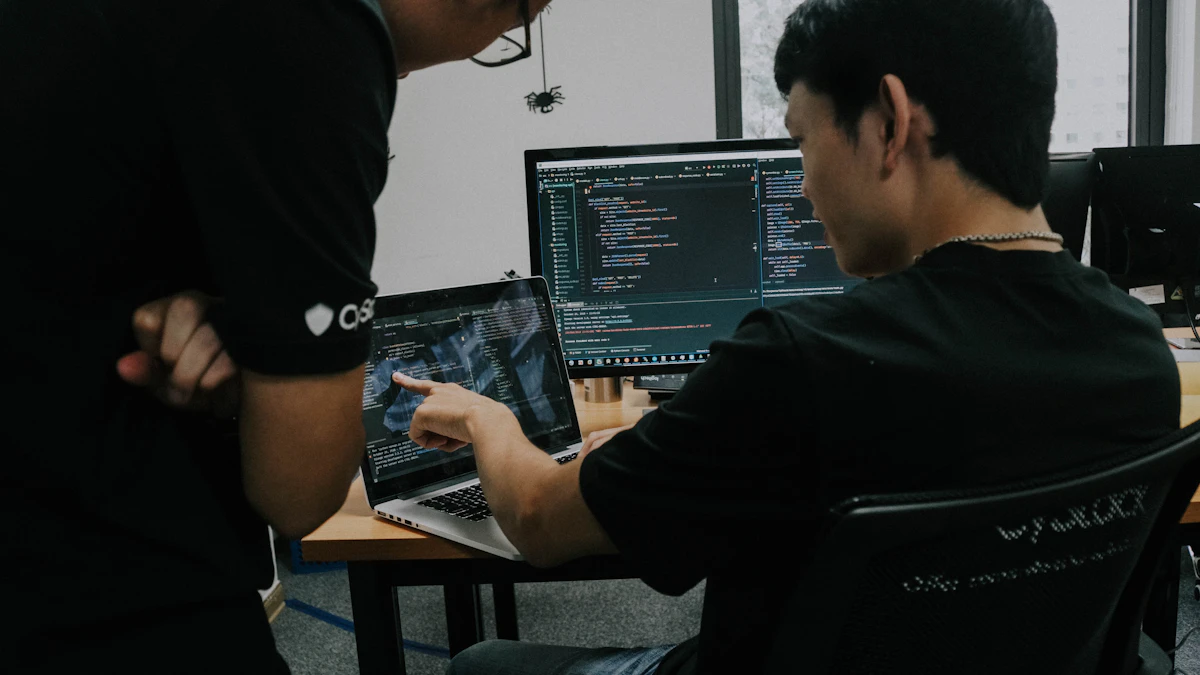
How to evaluate AI fluency in interviews
You cannot evaluate fluency from a resume line that says 'experienced with AI tools.' Almost everyone writes that now. The signal lives in the interview itself. We use three exercises in the technical loop for any senior role.
- Codebase navigation under time pressure. Drop the candidate into a 50k-line repo they have never seen and ask them to find where a specific bug surfaces. AI-fluent engineers reach the answer in 8 to 12 minutes. Non-fluent candidates take 25 to 40 minutes or give up.
- Prompt-to-PR walkthrough. Show a feature spec. Ask the candidate to talk through how they would prompt their assistant of choice, what validation they would run on the output, and what they would not trust the model to do unsupervised. Strong answers cover failure modes, not just happy paths.
- AI output debugging. Hand the candidate a piece of generated code that compiles, passes tests, and contains a subtle correctness bug. The bug is the kind that only shows up in production traffic. We watch how quickly they spot it and how they explain why the model produced it.
Candidates who pass all three exercises ship faster in their first 90 days. Candidates who pass two and stumble on the third still tend to outperform non-fluent senior hires. Candidates who fail all three are not bad engineers. They just need three to six months of internal investment to catch up. For companies hiring senior contributors who need to land running, that gap is expensive.
What this means for your hiring funnel
If your job description still leads with framework names and years of experience, you are filtering on the wrong axis. The engineers who will define your 2026 throughput are filtering themselves out. They read job posts the way buyers read product pages, looking for signals that the company understands the work.
The fix is not to add 'AI experience required' to the requirements list. That filters for resume keywords. The fix is to rewrite the job description in terms of what the engineer will own, what tools they will reach for, and what the team's relationship to AI assistants actually looks like.
We do the same thing when we shortlist for our clients. AI fluency is layer one of our 8-layer vetting framework, and every Opus role brief now includes a section on the team's AI workflow before resume parsing starts. Candidates who say 'I want to work with a team that uses AI seriously' are the ones we move through fastest. That signal alone tells us more about role fit than three years on a resume ever did.
The senior hire bar keeps moving
Two years ago, a senior engineer was someone who could own a service end to end and mentor mid-levels. That definition still holds. What has changed is what owning a service end to end actually means. The senior engineers shipping the most business value right now are not the ones writing the most code. They are the ones orchestrating the smallest number of AI calls, human reviews, and deployment gates to ship a working feature.
The bar will keep moving. Companies that hire today against the 2023 senior bar will spend 2026 retraining their hires into 2026 fluency. Companies that hire against the 2026 bar today will spend 2026 shipping.
If you are sourcing senior engineers from Latin America, every Opus engineer ships with AI fluency pre-certified before day one. Eighteen days from brief to signed offer. Eight layers of vetting before any candidate reaches your inbox. Ninety-six percent retention at the one-year mark. Lifetime replacement if a hire ever turns out wrong, every time. One single monthly rate covers payroll, compliance, and international tax. Senior LatAm talent, sourced by AI and vetted by humans. Built to stay.